
The Grid
An immersive mixed-reality installation where users interact with soundscapes and geometry to shape a shared, evolving narrative.
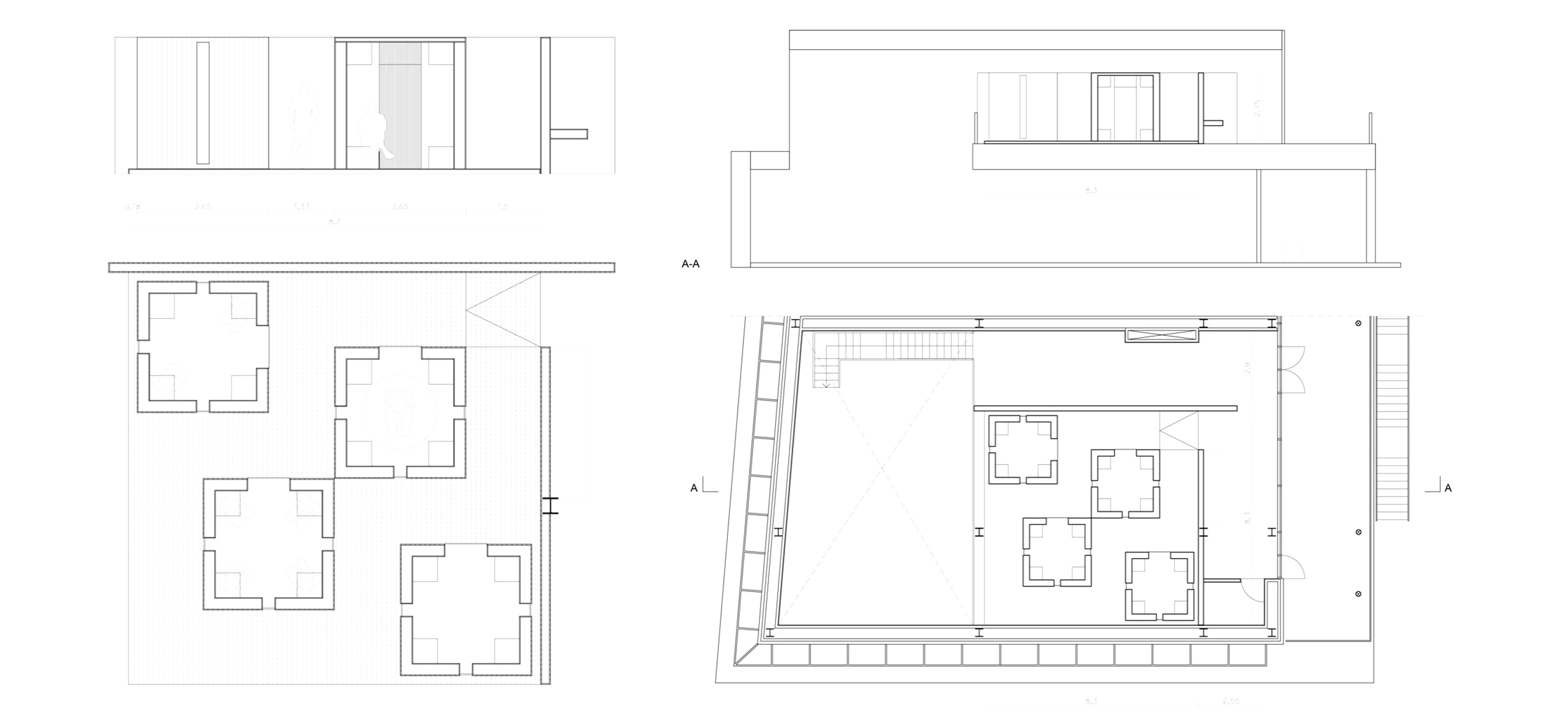
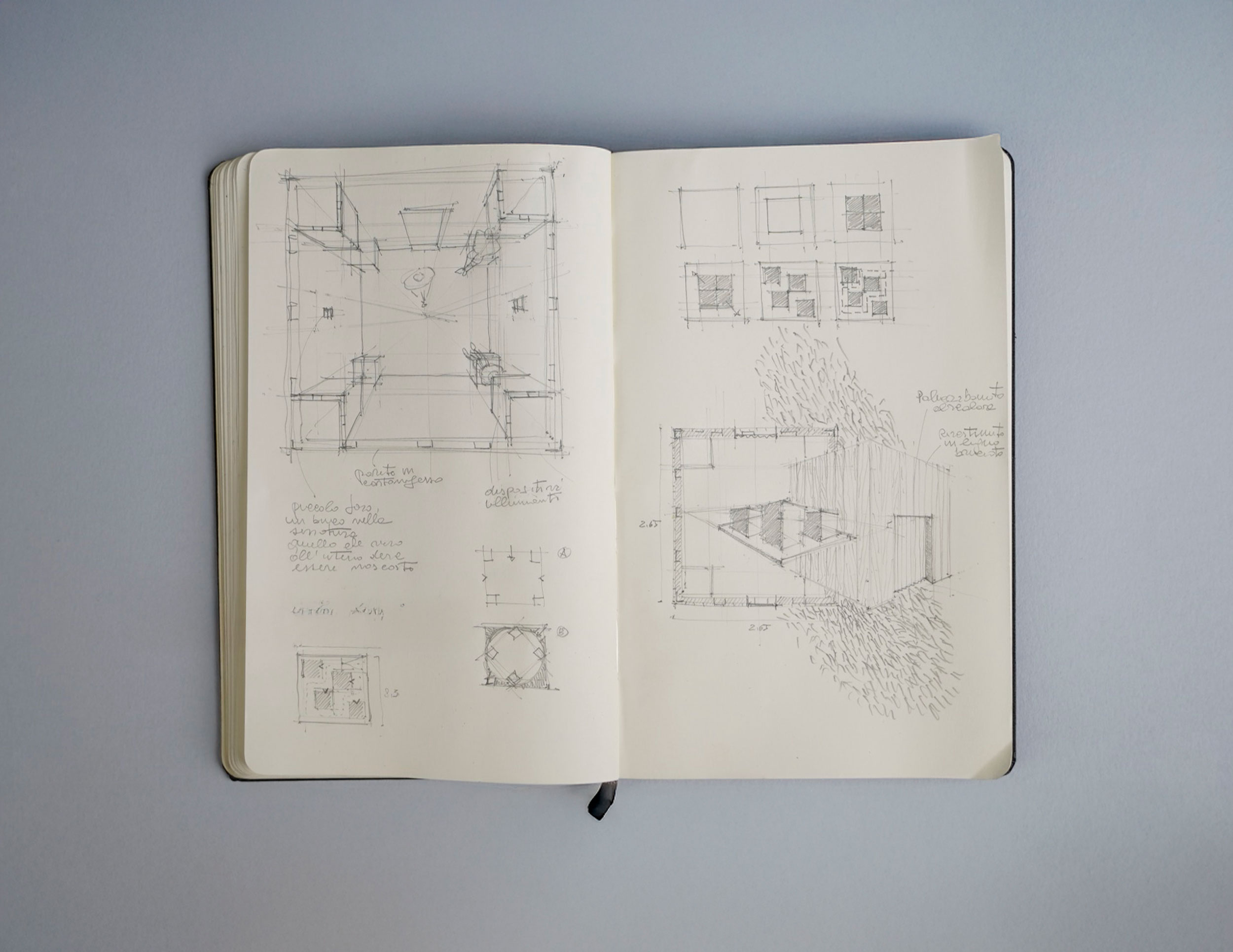
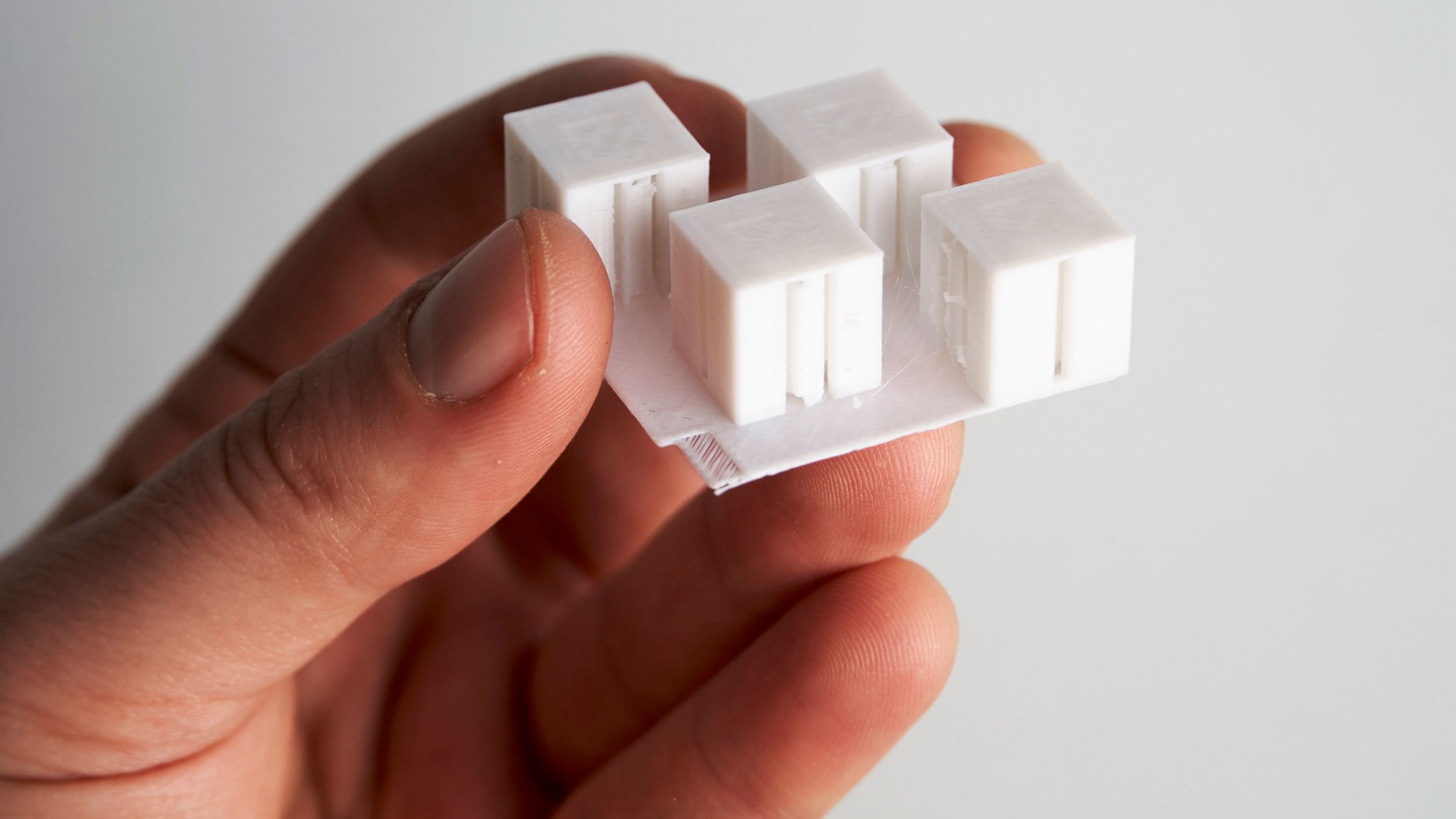
An immersive installation of experiential cubes hosts a shared, multiplayer journey.
Beginning from a common scenario, users embark on intimate explorations shaped by immersive soundscapes. Hands interact with geometries, altering the mixed reality environment.
Each movement transforms the surrounding world into new personal narratives, blending interaction with perception. At the center, a levitating mass of black matter rises, swells, and fragments. New elements orbit the core, constructing turbulence as sculptural fragments.
Exteriors
Externally, the capsules appear monolithic, their softened edges dissolving volume into shadow. Water surfaces encircle the black masses, amplifying reflections and sound. The thin mid-line windows create curiosity, offering glimpses inside while preserving mystery, anticipation, and the separation between worlds.
Interiors
The interiors reverse the dark exterior with continuous white surfaces, curved corners eliminating any sharp boundary. Each capsule holds four seats placed diagonally, creating a spatial choreography that invites encounter, while the absence of angles fosters comfort, equality, and fluid perception.
Materials
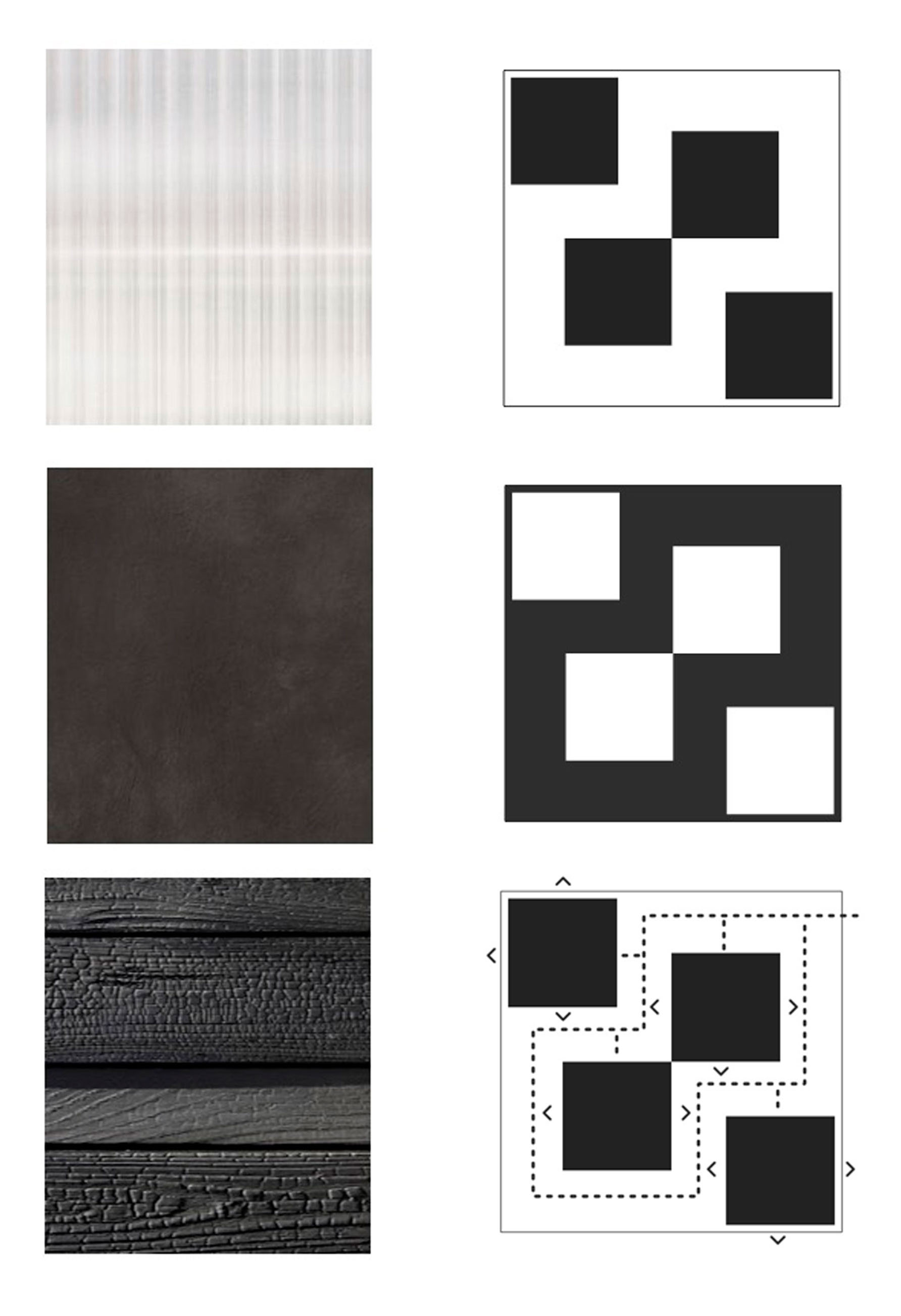
Material choices reinforce symbolic contrasts: burned wood ashes layered as plaster evoke transformation, resin floors absorb light into depth, and water integrates reflection with sensory stillness. Together, these elements transform the capsules into living thresholds between collective ritual and intimate immersion.

Individual experience begins with tactile instructions, illuminated contours guiding hands to throw shapes toward the core. The impacts generate turbulence,
reshaping the mass. Disintegration follows, scattering fragments across the floor and constructing a landscape for each user’s personal story.
Exploring this terrain, users encounter companions transformed into geometric presences. Interaction continues with monoliths: fragments are broken and recomposed, but never fixed. Each sculpture mutates under another’s gaze, shifting form and material, embodying collective influence within an unstable shared environment.
